Roll Forming Machine Supplier
Roofing & Cladding Lines
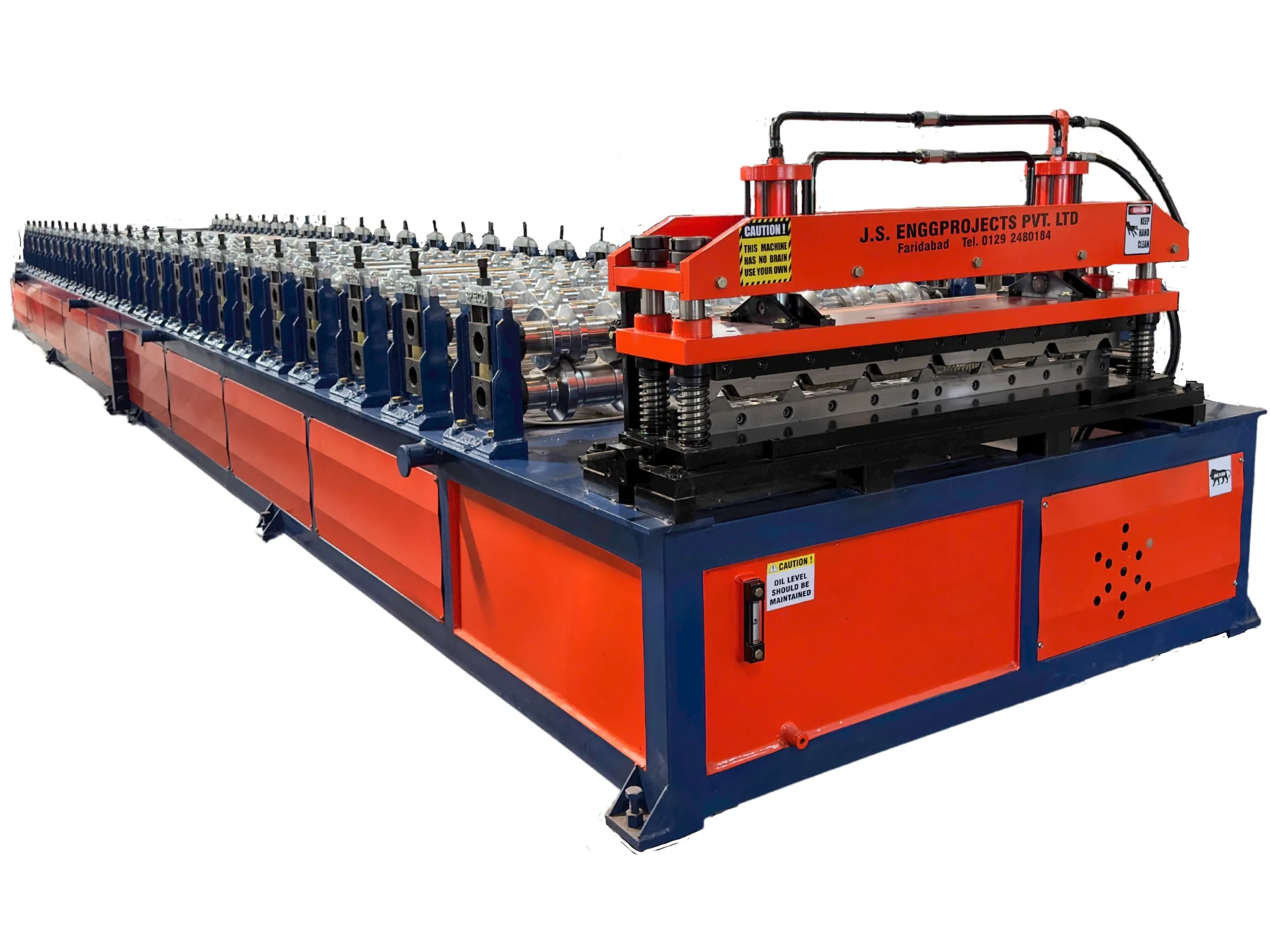
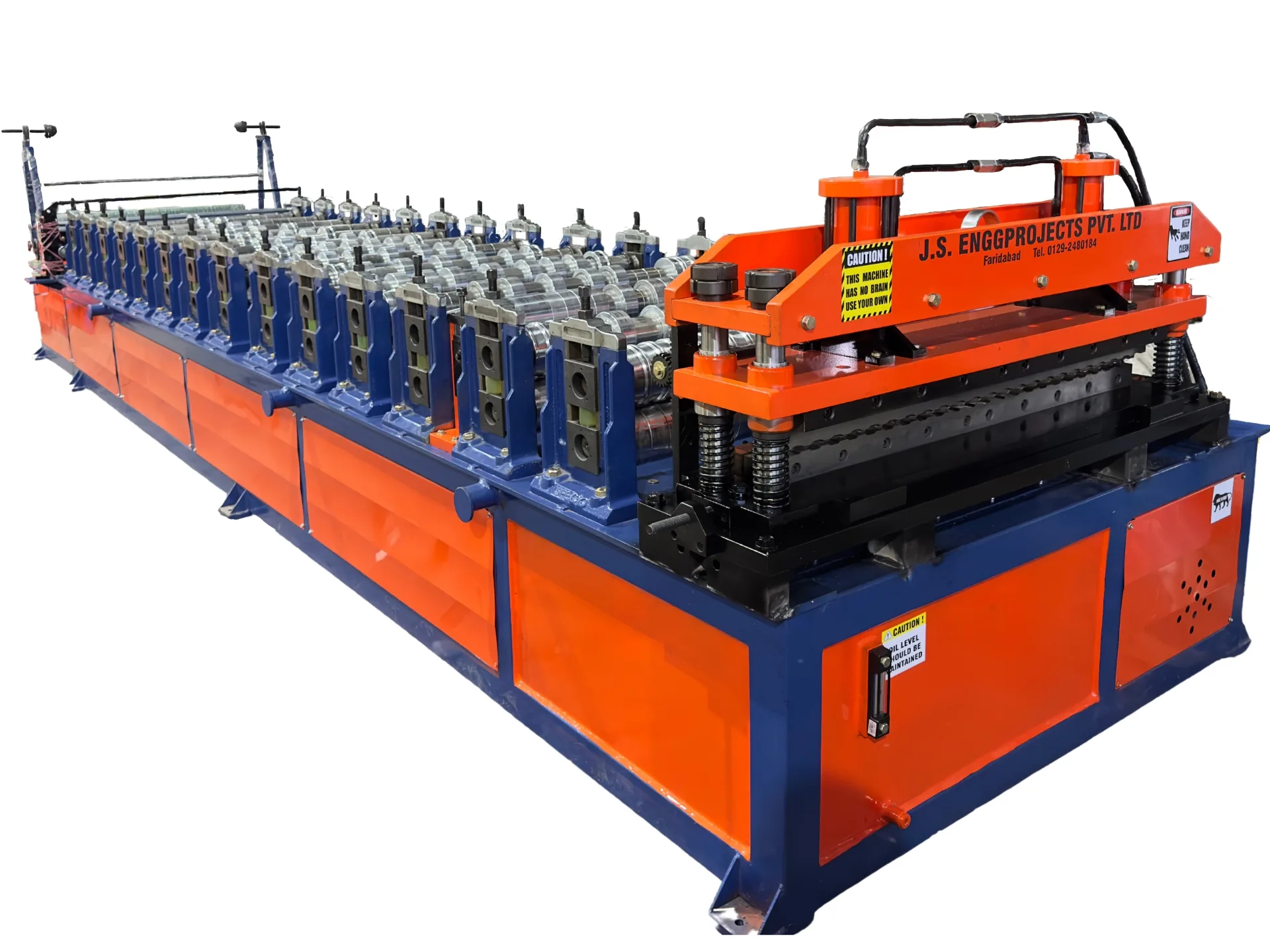
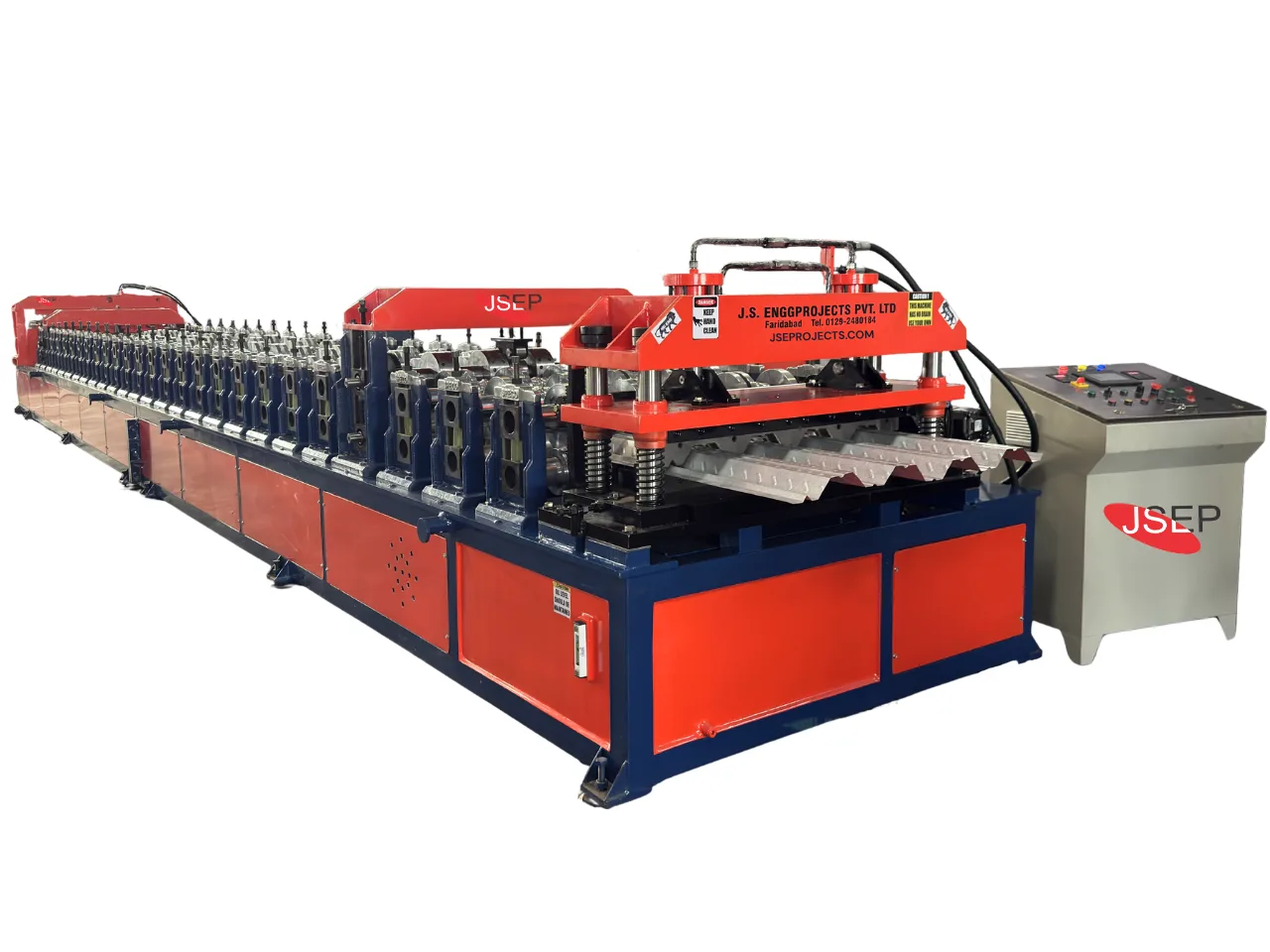
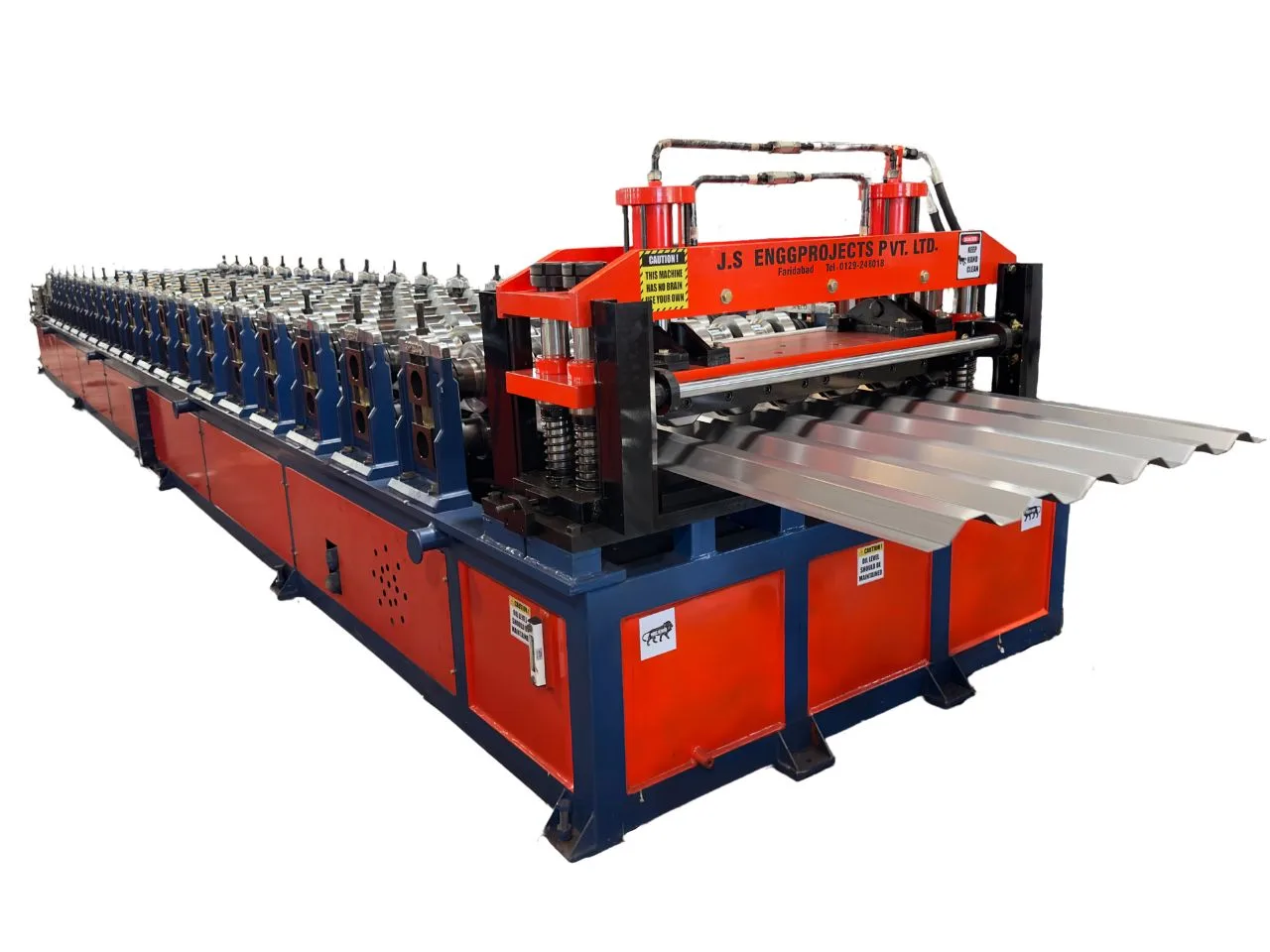
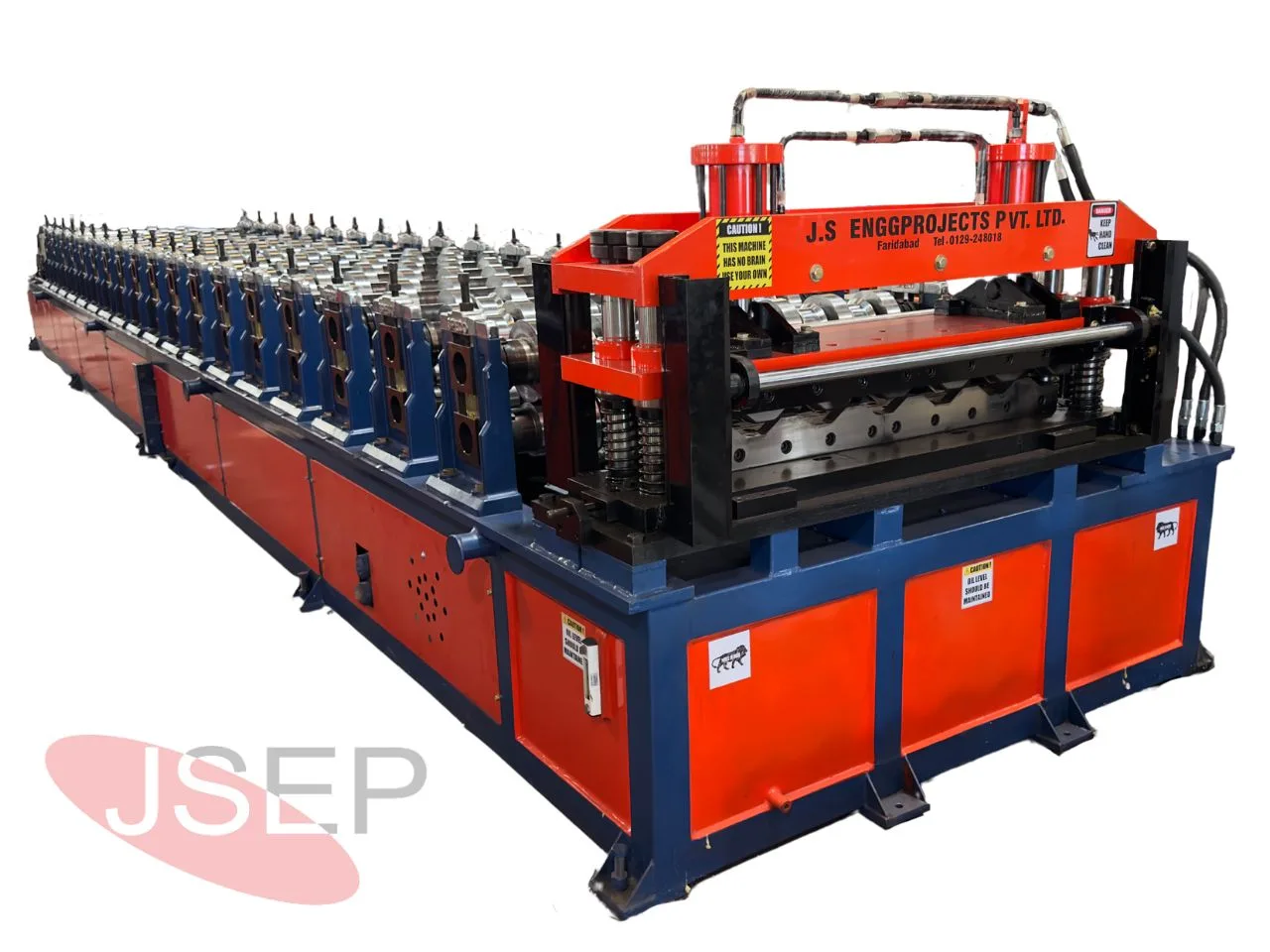
Buyers in this range typically choose between a dedicated single-profile machine (maximum forming speed for one sheet type) or a double-layer machine (two profiles on one line, lower capital cost). JSEP manufactures both options. Material compatibility across all roofing machines: PPGI, GI, Galvalume, and Aluminium coil from 0.3mm to 0.8mm thickness.
HI-RIB / Trapezoidal Machine
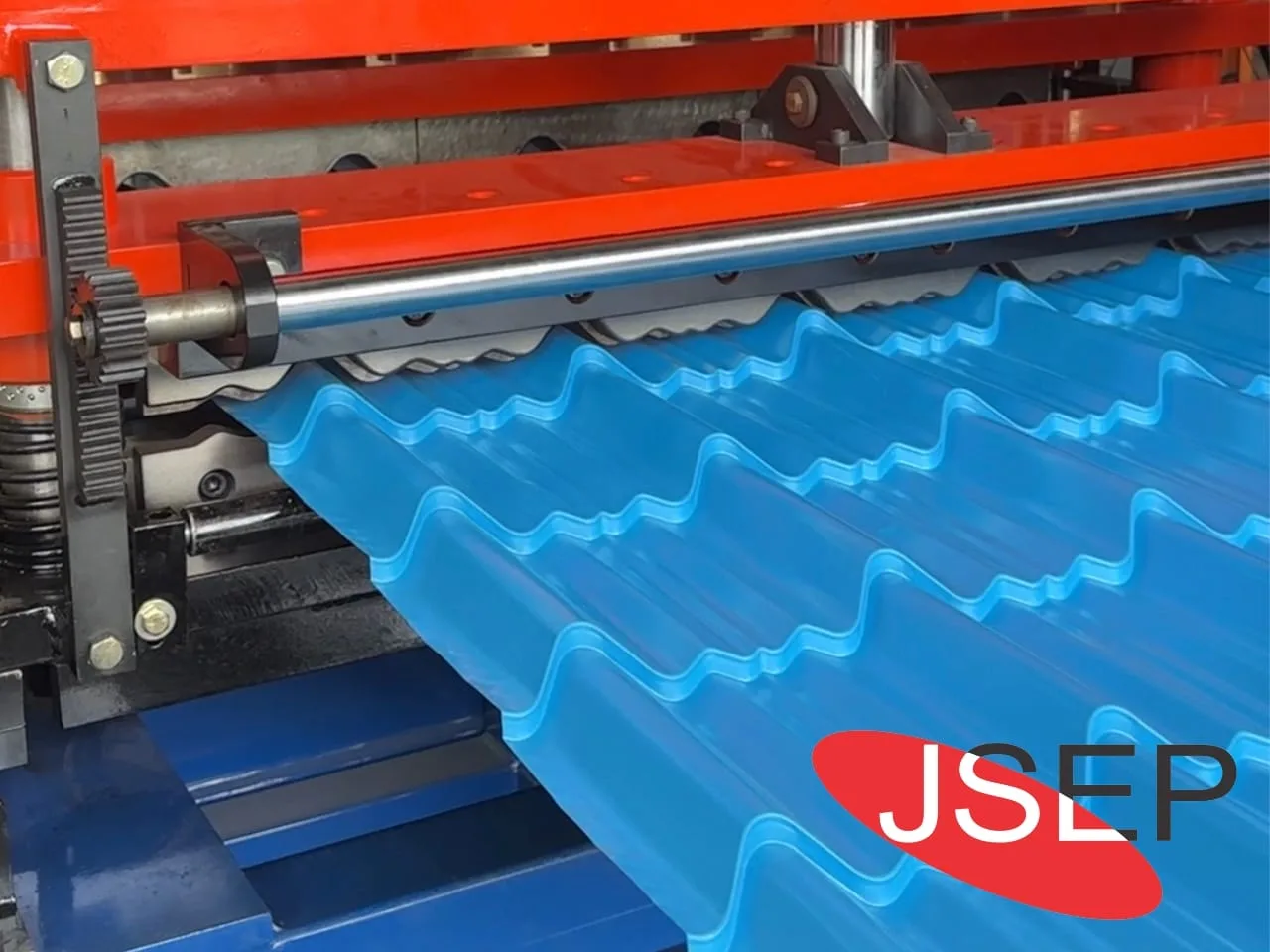
India’s most widely produced industrial roofing profile. HI-RIB trapezoidal sheets cover the majority of PEB warehouses, factory sheds, and logistics parks built in India. Material: PPGI, PPGL or Galvalume 0.3–0.8 mm.
Tile Profile Roll Forming Machine
Produces decorative tile-look metal roofing sheets for residential, commercial, and hospitality construction. Material: PPGI or Galvalume 0.3–0.6 mm. A JSEP Tile Profile Machine is the most widely supplied machine in our roofing range after the HI-RIB line.
Standing Seam Roll Forming Machine
The standing seam is mechanically locked on-site using a JSEP Roof Seamer. Suitable for airports, hospitals, data centres, and premium commercial structures requiring a fully weatherproof, maintenance-free roof. Portable site-forming option available for on-roof installation without a factory line.
Liner Profile Roll Forming Machine
Produces the thin inner face (0.3–0.5 mm PPGI or GI) used in PUF panel cold storage rooms, pharmaceutical clean rooms, and food processing facility walls.
Corrugated Profile Machine
Sine-wave corrugated roofing sheet machine for industrial sheds, agricultural buildings, and low-cost rural warehouses. Material: PPGI, GI 0.25–0.60 mm. The corrugated profile is one of the oldest and most widely used metal roofing sections in India.

Structural & Purlin Roll Forming Machine
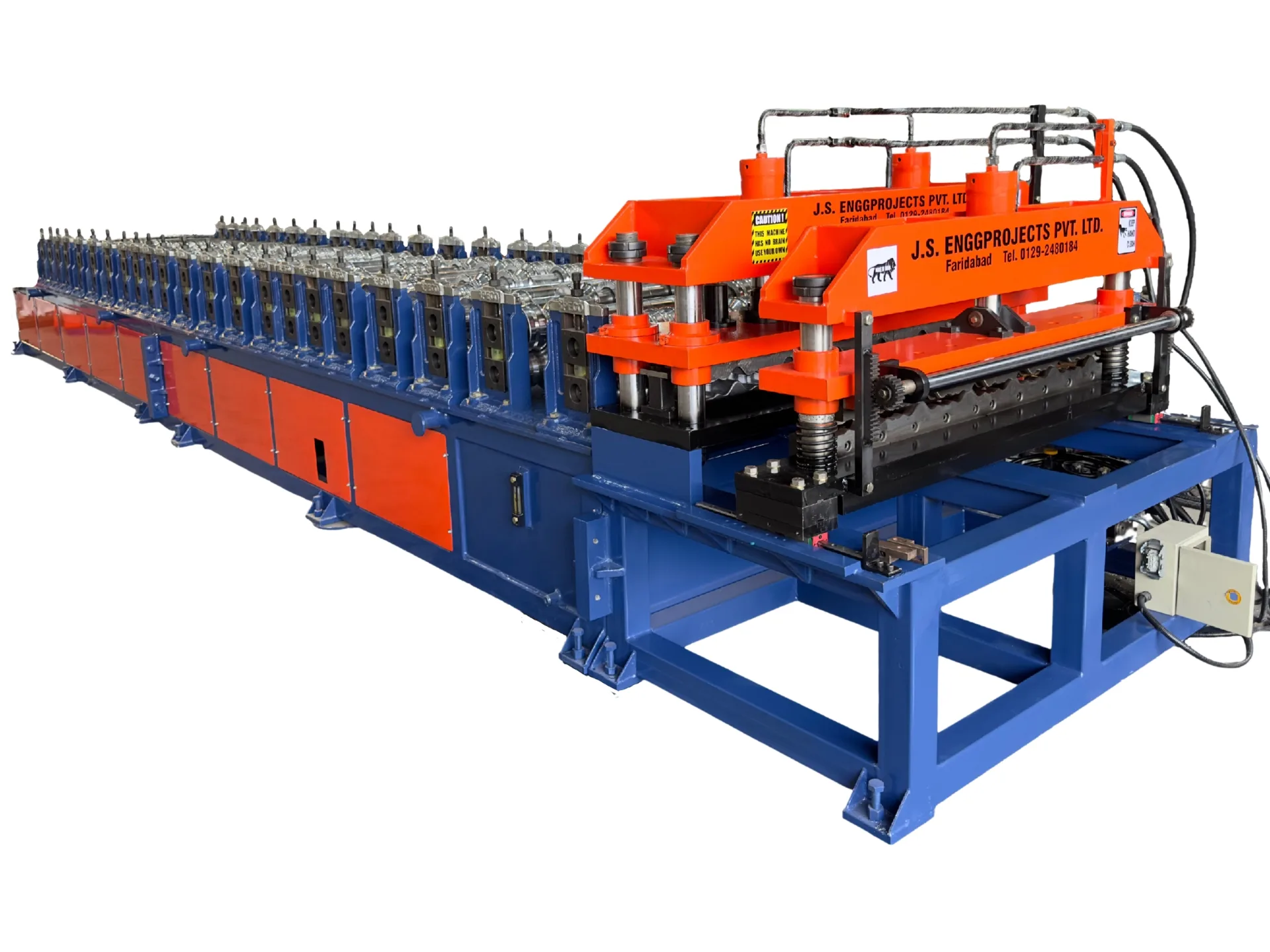
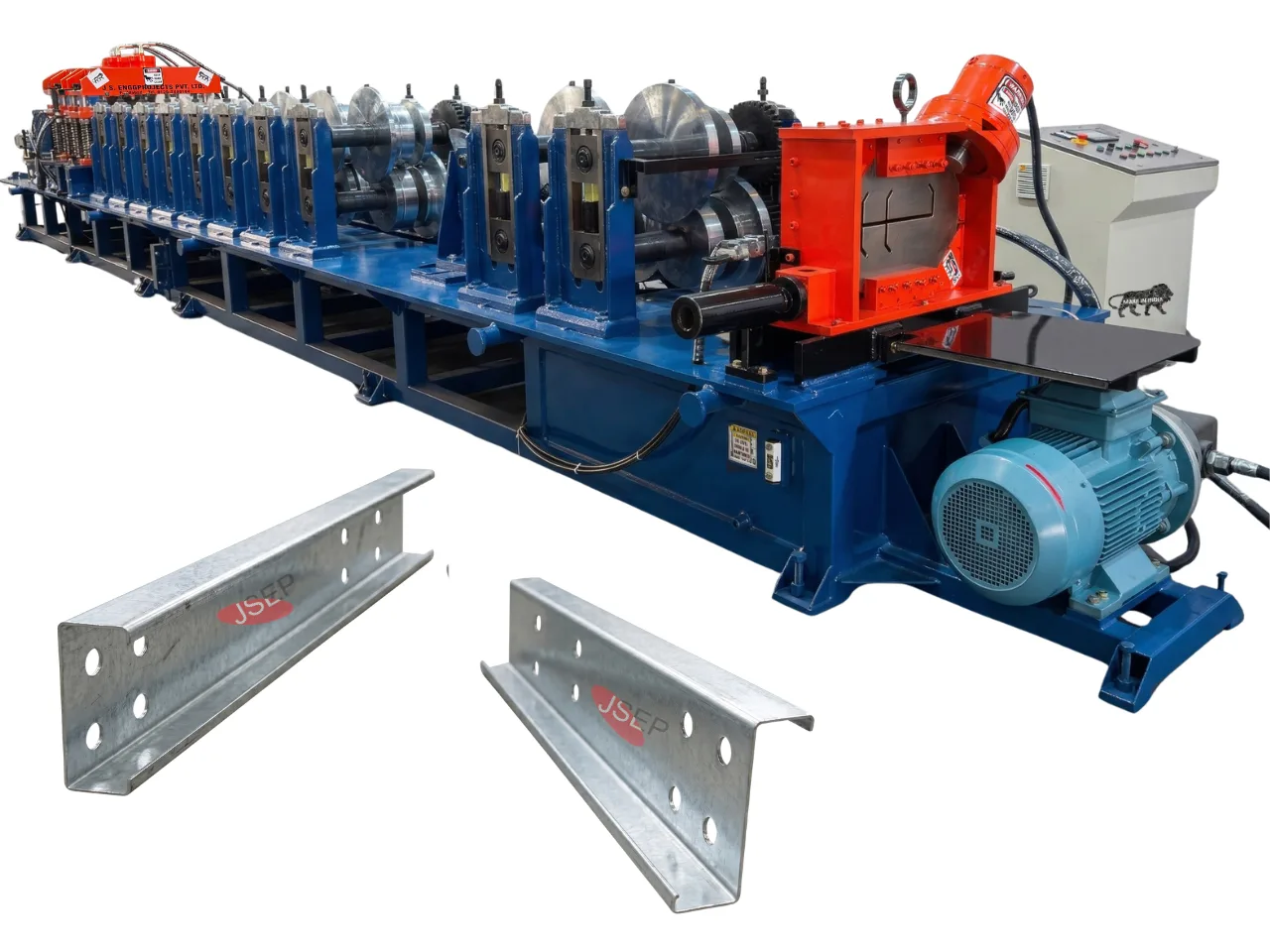
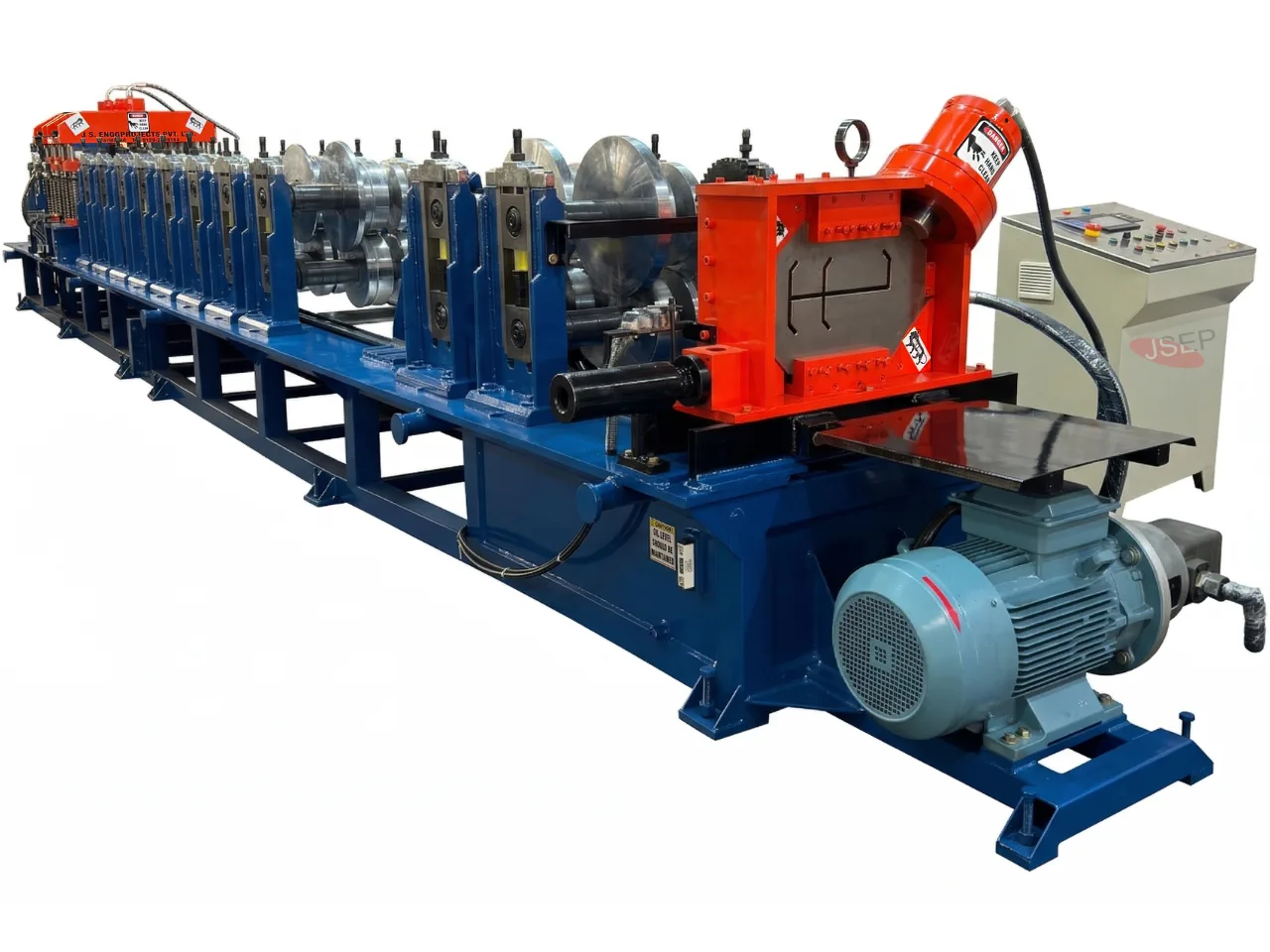
For pre-engineered building construction, the C/Z interchangeable purlin machine is the highest-demand machine in this range one line produces both C and Z section sizes by switching the cutting die, reducing capital cost for PEB manufacturers. All structural machines process HR and CR steel coil from 1.5mm to 3.0mm and include integrated bolt-hole punching as standard.
C Z Purlin Machine
Produces C80–C300 and Z100–Z300 purlins on a single interchangeable line. Automatic bolt-hole punching, Delta PLC, programmable length counter, and batch cutter. Processes CR steel coil 1.5–3.0 mm. The most widely sold machine in the JSEP range.
Deck Profile Machine
Metal floor deck forming machine for composite slab construction in multi-storey buildings, mezzanines, and industrial platforms. PLC touchscreen with automatic cut-to-length and batch count. Used extensively in high-rise and commercial construction across Delhi NCR and Mumbai.
Container Profile Machine
Produces the heavy corrugated wall panels used in 20-foot and 40-foot ISO shipping containers, portable site offices, and modular storage units. Processes CR steel coil up to 3.0 mm significantly thicker than standard roofing sheet machines.
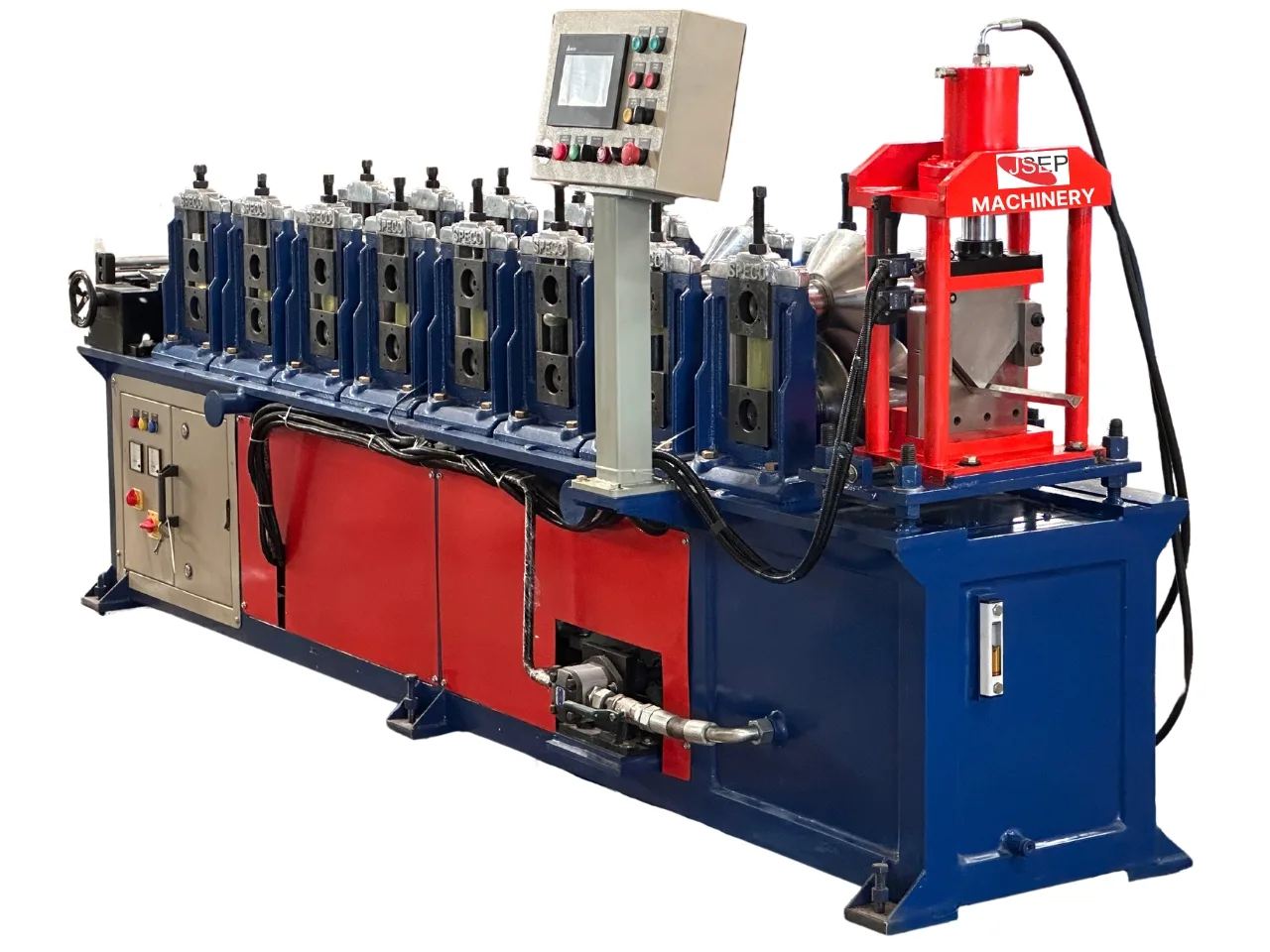
Angle Roll Forming Machine
Produces V-shape and L-shape structural angles used as frame members, wall lintels, purlin stiffeners, and edge trims in PEB and general steel construction. Commonly supplied alongside a C/Z purlin line for complete PEB structural section production.
Specialized Industrial & Insulated Lines
These machines are built to confirmed orders and require custom engineering from our Faridabad design team. Every specialised machine is manufactured against customer-supplied profile drawings, sample sections, or applicable international standards. On-site installation and operator training are included with every delivery.
PUF Panel Machine
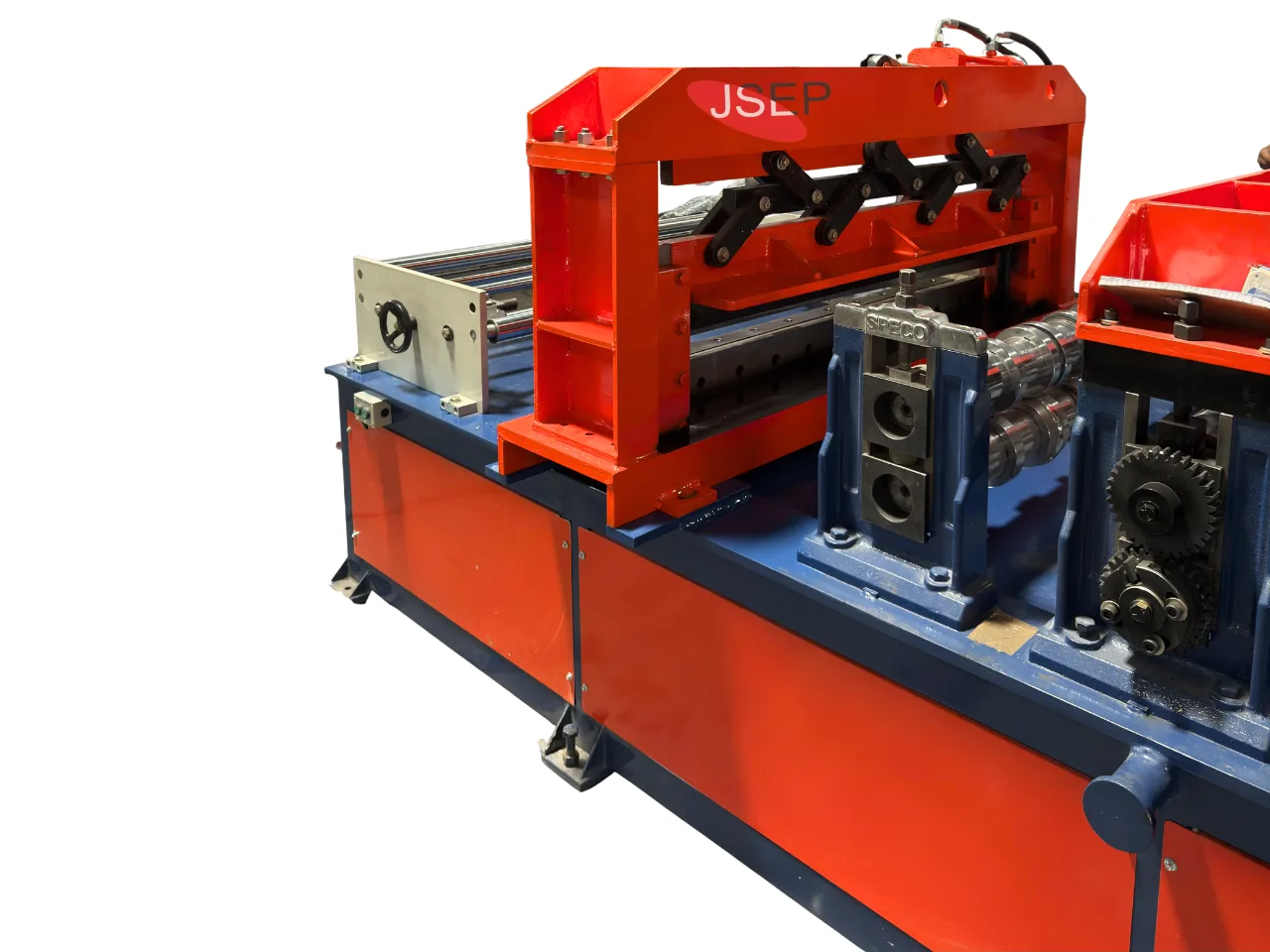
Continuous insulated sandwich panel production line. Top and bottom PPGI sheets are formed simultaneously and the finished panel is cut to length in a single pass. Used by manufacturers supplying cold storage rooms, pharmaceutical clean rooms, server room enclosures, and insulated industrial cladding systems.
Guardrail Roll Forming Machine
W-beam and Thrie-beam highway crash barrier forming machine for national highway and expressway construction. Processes galvanised steel coil 2.0–3.0 mm through 16 forming stations. Profiles are compliant with IRC highway standards.
Truck Body / Panel Machine
High-strength panel roll forming line for commercial vehicle manufacturers. Produces truck side panels, trailer body sheets, and container wall panels from steel coil. 13–14 MT steel-welded machine frame with hard chrome forming rollers for heavy-gauge precision. Built for continuous production in truck body fabrication and commercial vehicle assembly plants.
Bamboo Profile Machine
Produces decorative bamboo-groove architectural cladding profiles for interior feature walls, exterior building facades, and canopy soffits. Popular with architects, interior designers, and fit-out contractors for retail, hospitality, and premium commercial projects.
Crimping Curve Machine
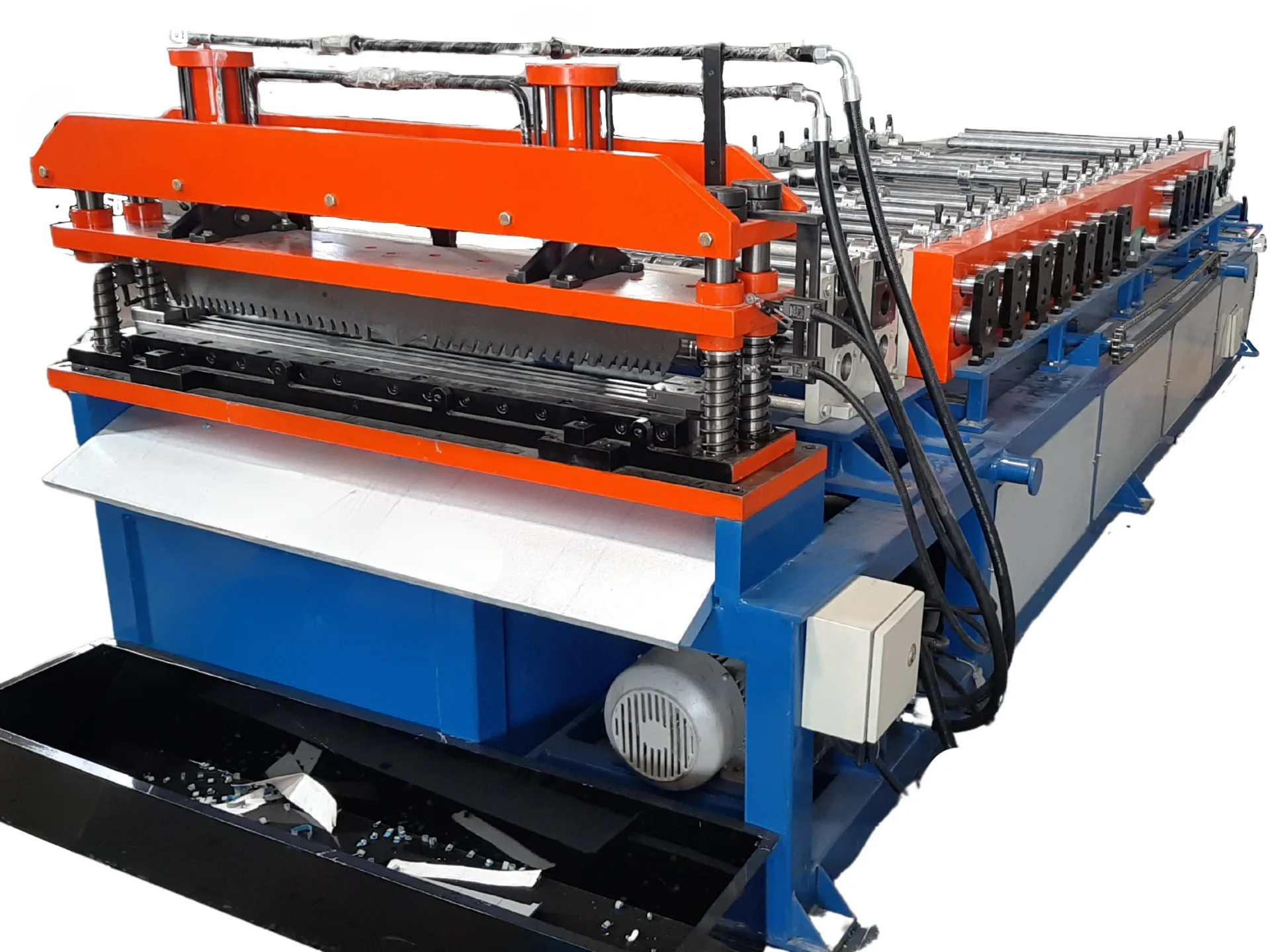
Curves pre-formed or flat roofing sheets into arched, barrel-vault, and bullnose profiles for curved roof structures. Works with HI-RIB, corrugated profiles produced on a JSEP forming line. Used for stadium canopies, aircraft hangar roofing, and architectural curved roof features. Can be integrated into an existing roll forming line or supplied as a standalone crimping machine.
Coil Processing & Handling Lines
A production line is only as reliable as its material feed and handling. JSEP auxiliary machines are engineered to integrate directly with any of our forming lines or operate as standalone units. All coil processing machines ship with installation and operator training.
Hydraulic De-Coiler
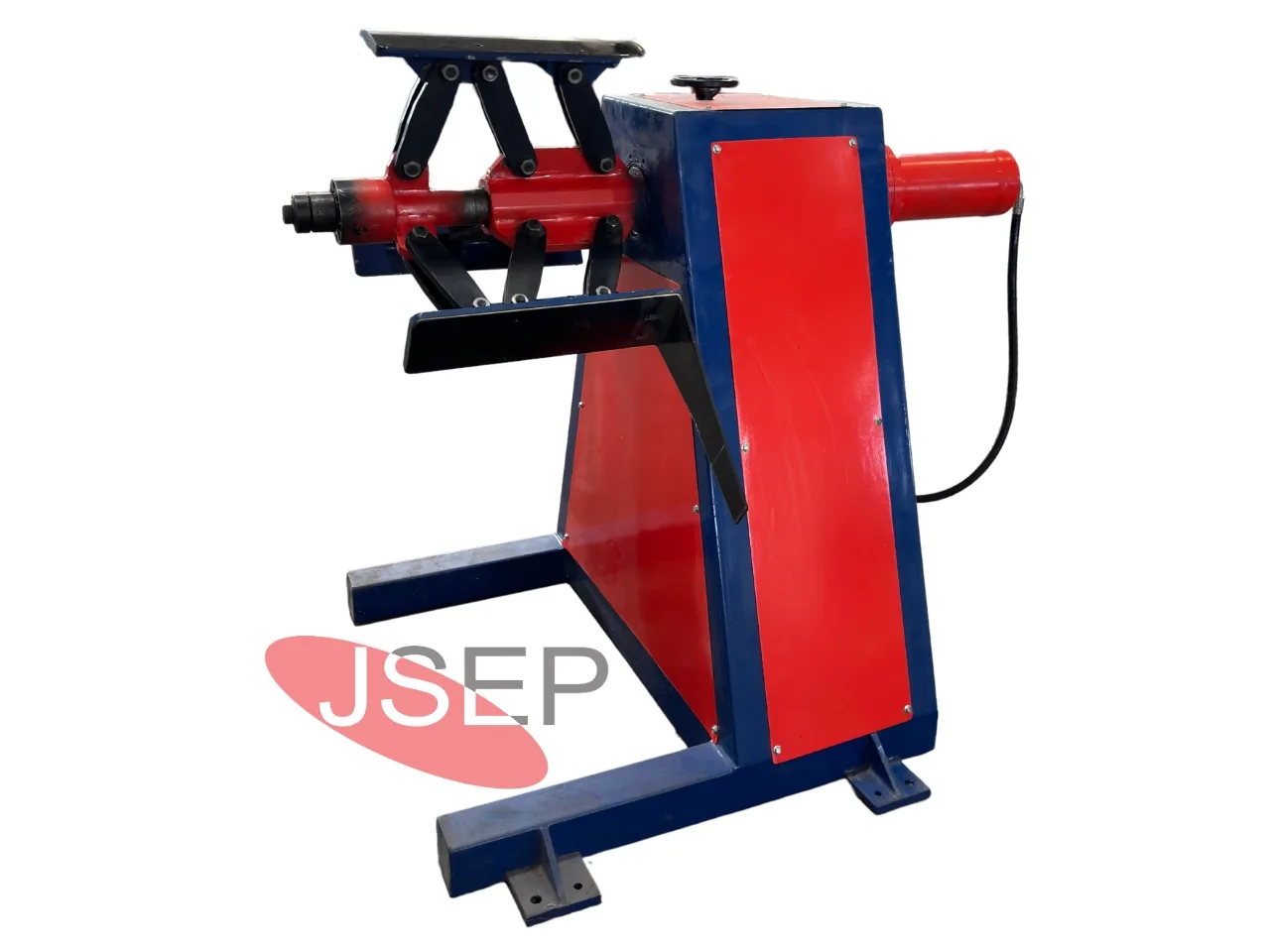
Single-head or Double-head hydraulic decoiler with 3 to 12 tonne coil capacity. The hydraulic expansion mandrel grips the coil bore for fast, secure loading without manual adjustment. Available in motorised unwind and manual brake variants. Supplied as standard with every JSEP roll forming line, or available standalone.
Slitting Machine
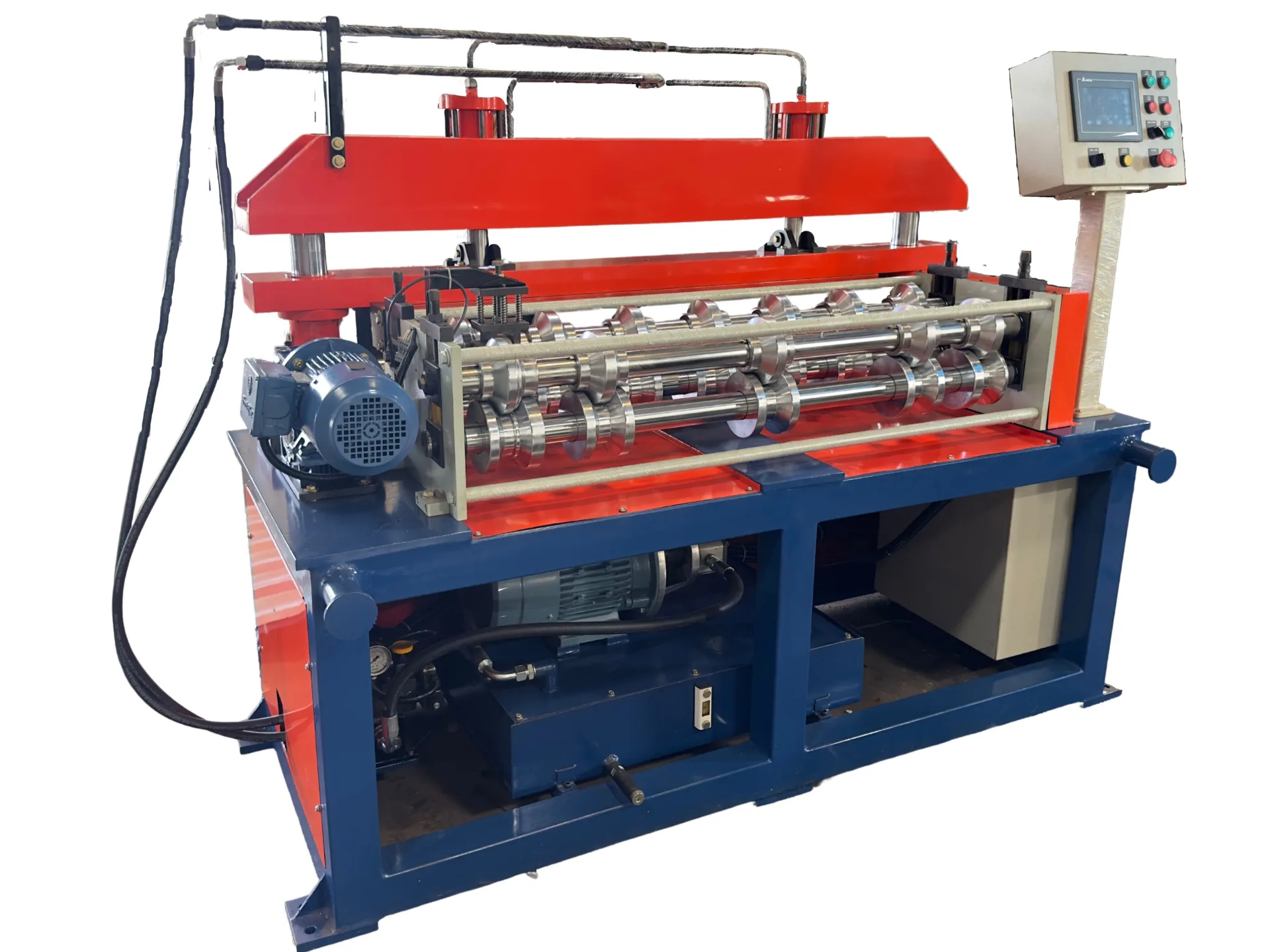
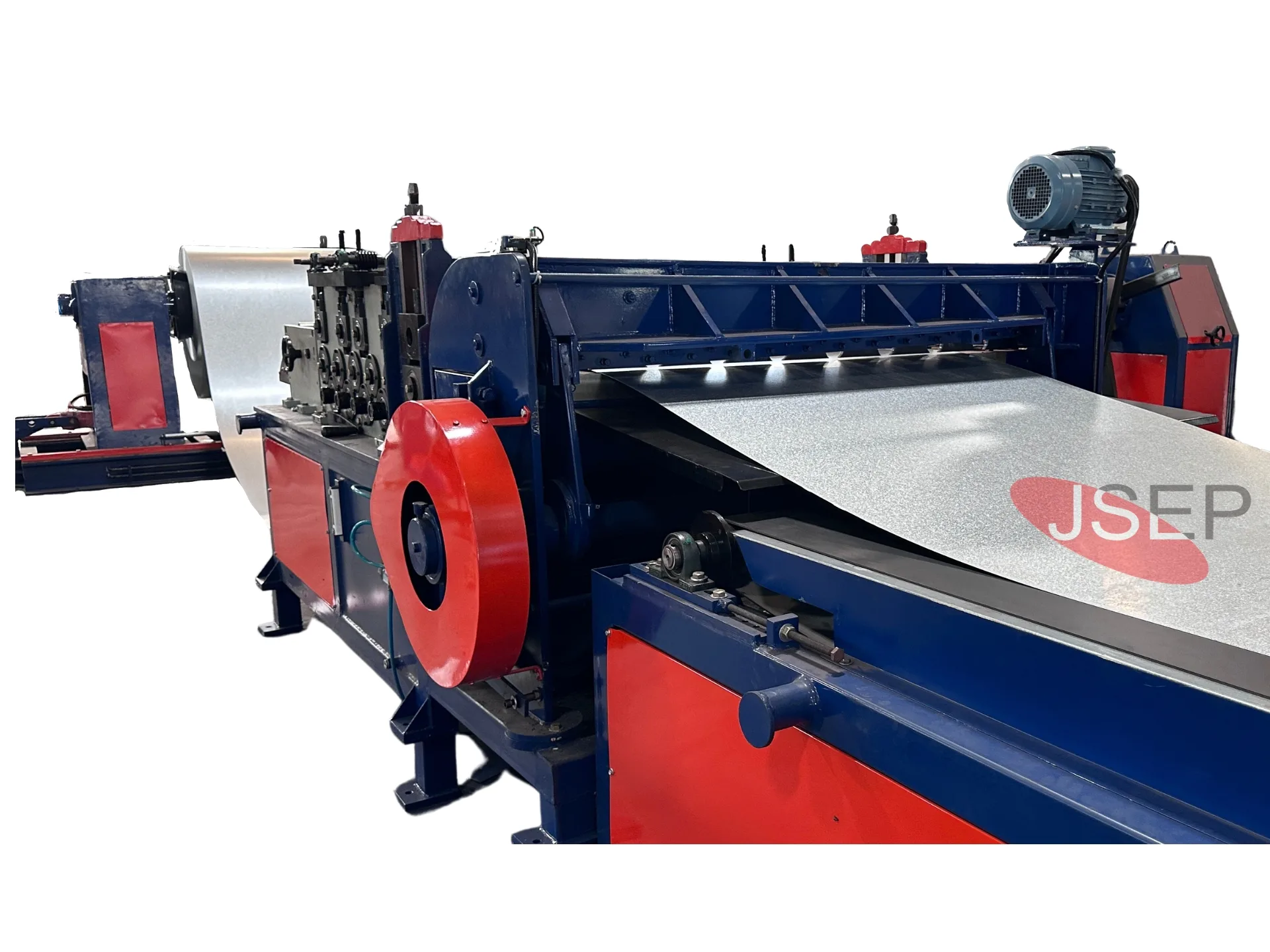
Precision slitting line for cutting wide master coil (typically 1000–1400 mm) into multiple narrower working widths for roofing sheet or purlin production. Used by coil service centres, roofing sheet manufacturers who buy wide coil, and purlin producers requiring specific input coil widths.
Cut To Length Machine
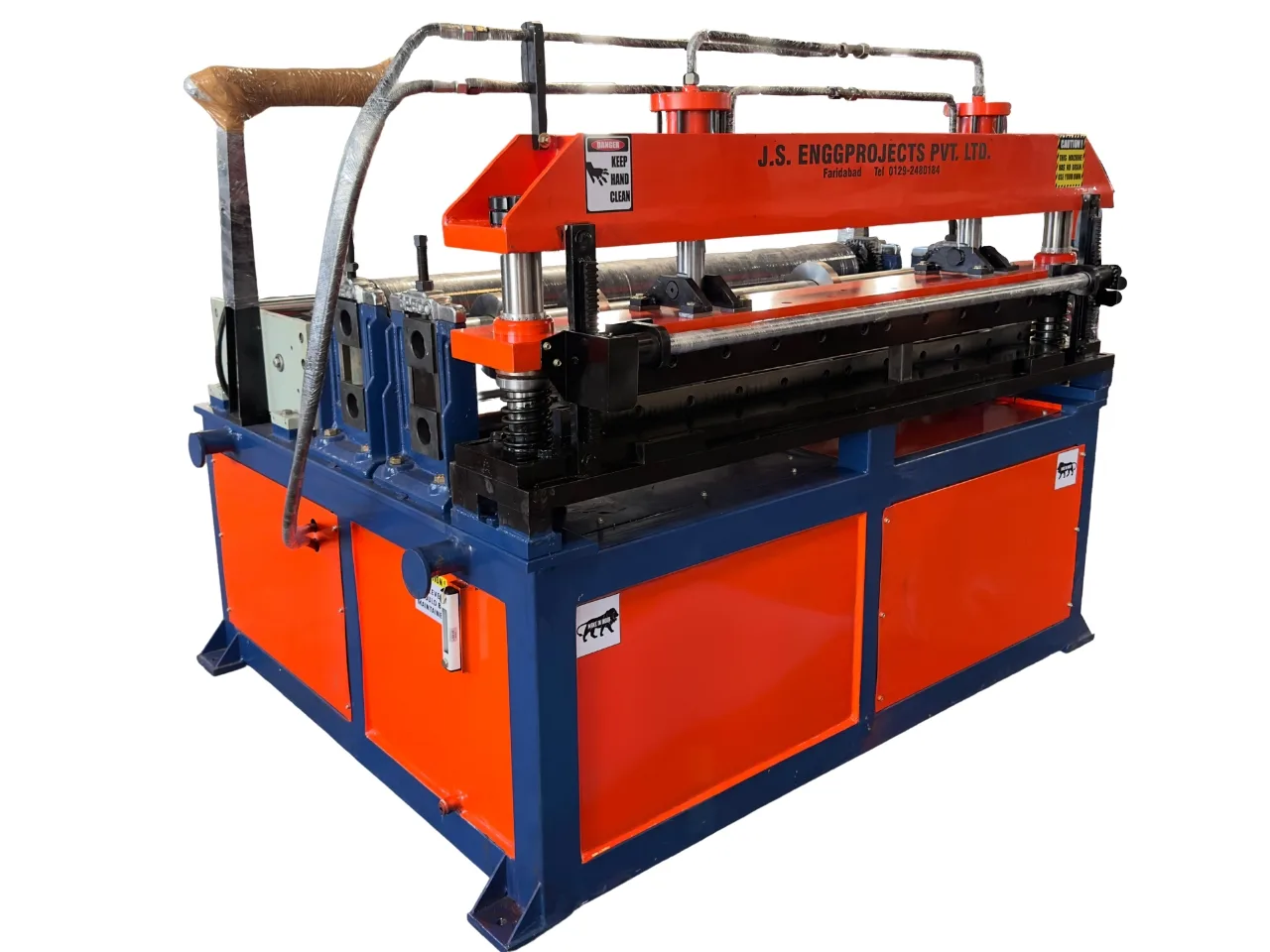
Fully automatic coil-to-sheet cutting machine with length accuracy. Processes CR, PPGI, and Galvalume coil. Used for producing press shop blanks, pre-cut sheets for manual forming, and finished roofing sheets for direct sale without a roll forming line. PLC-controlled with programmable cut length, batch count, and automatic stack count.
Press Brake Machine
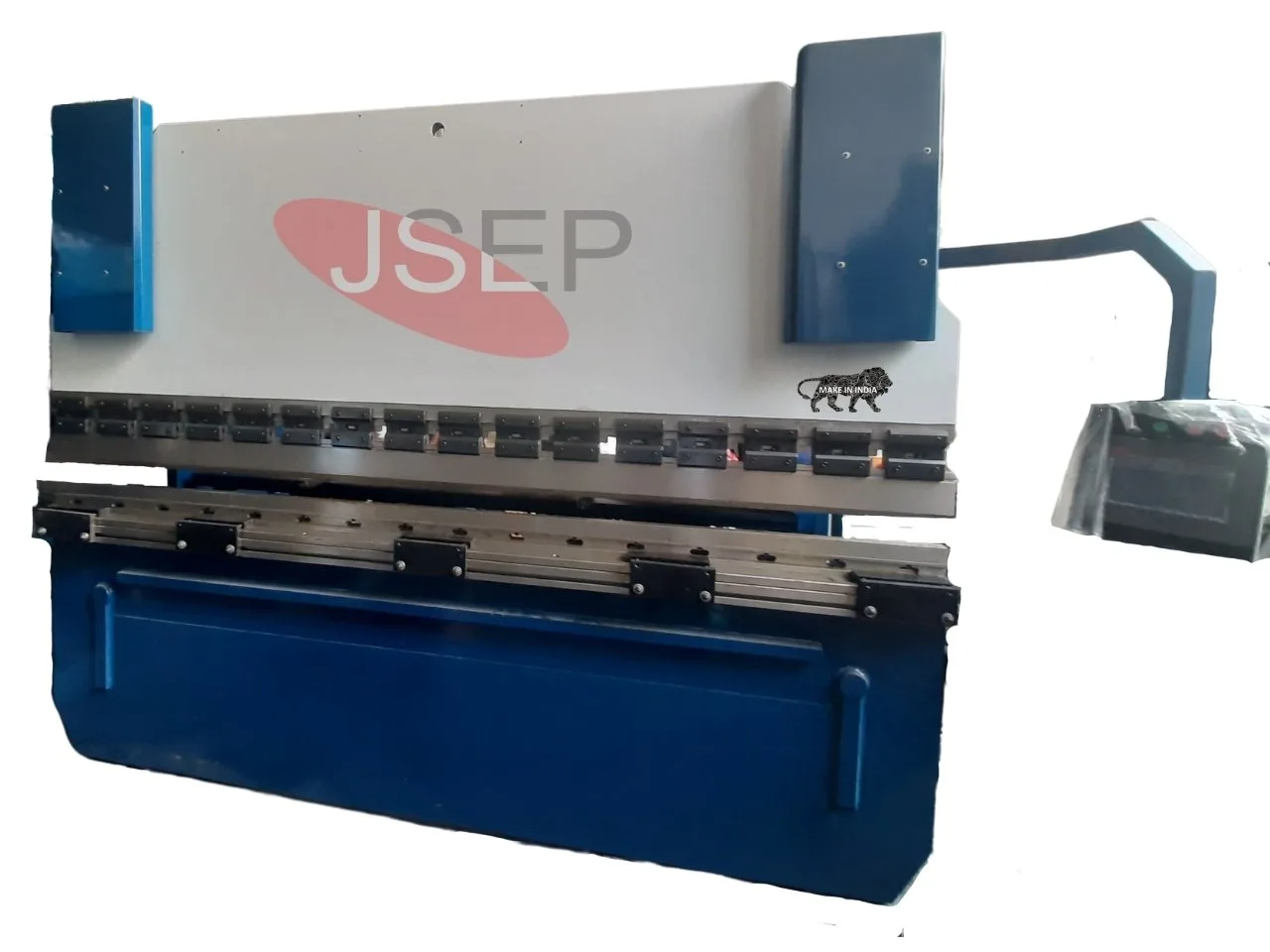
Hydraulic press brake for bending ridge caps, valley gutters, flashings, drip edges, angle trims, and custom sheet metal sections. Commonly supplied alongside a roofing sheet line or standing seam machine to complete the sheet metal accessory fabrication capability of a roofing factory.
Roof Seamer
Electrically powered, site-portable seaming machine that mechanically locks standing seam panels on the roof without exposed fasteners. Designed to work with JSEP standing seam profiles. Produces a consistent, watertight seam at controlled speed across the full panel length. Supplied as part of a complete standing seam line or available as a standalone tool for roofing installation contractors.

Why buy a Roll Forming Machine From JSEP?
Every roll forming machine manufacturer will tell you their machine is precise, durable, and well-supported. Here is what specifically distinguishes a JSEP machine in technical terms.
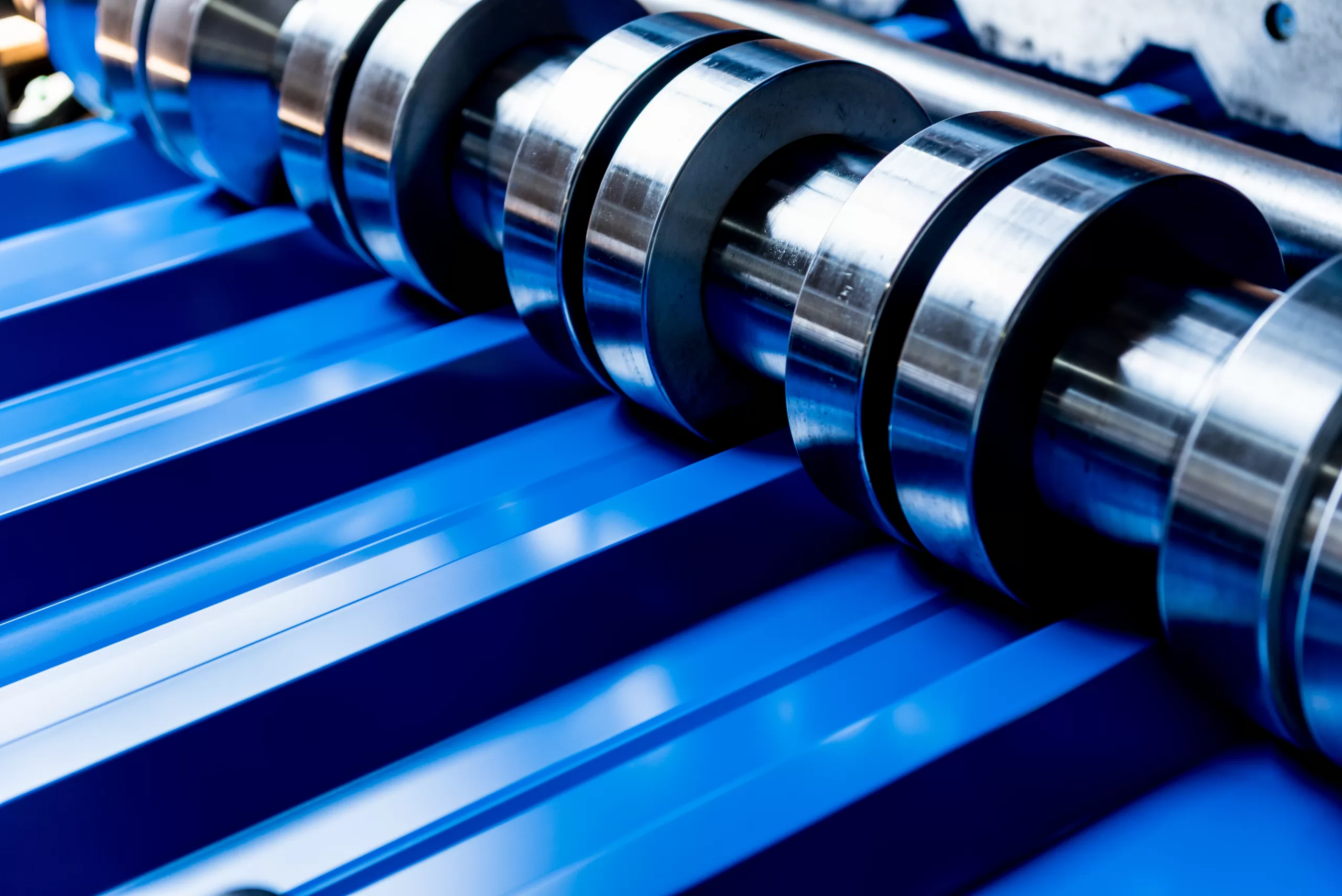
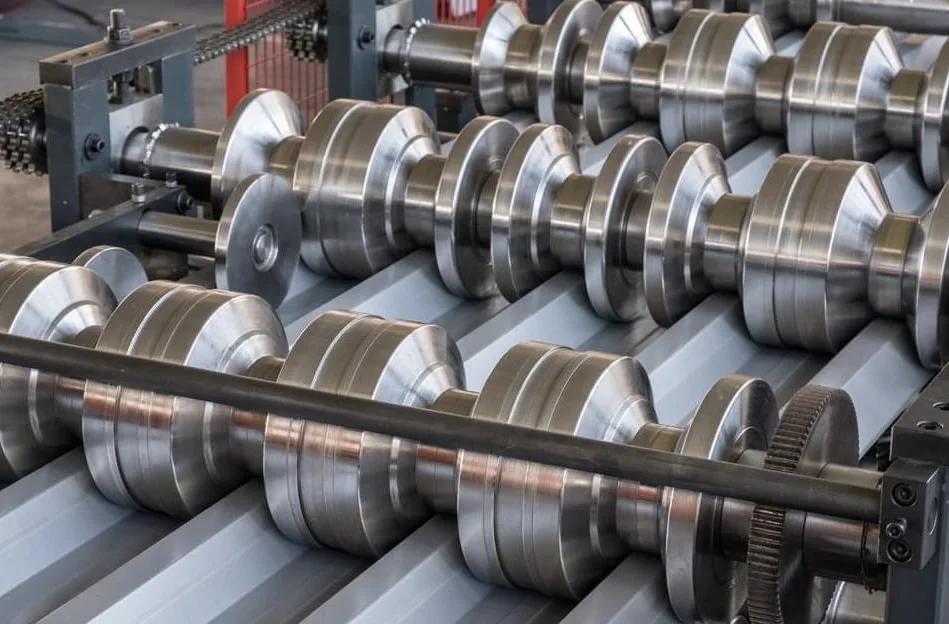
EN-31 hardened rollers, ground and chrome plated to 30–35 microns
Every forming roller we manufacture starts as EN-31 alloy steel billet. After machining, each roller is through-hardened, precision ground, and hard chrome. Cheaper machines use mild steel rollers these wear within 12 to 18 months under continuous production. JSEP rollers consistently last 8 to 12 years in the same conditions. The chrome plating also prevents coil coating (PPGI paint) from sticking to the roller surface, which matters for tile and standing seam profiles that require a scratch-free finish.
Every machine is built, loaded, and tested at our factory before dispatch
We do not assemble your machine and send it. Every JSEP machine runs under full production load at our Faridabad factory. Profile accuracy, cut length tolerance, PLC programming, hydraulic pressure settings, roller alignment, and forming speed are all checked and signed off by our QC team before the machine is crated for transport. If a measurement is out of specification, we correct it before it leaves.
In-house roller tooling design and CNC machining
The forming rollers and cutting dies are the precision core of every roll forming machine. We design all roller tooling in-house using profile geometry software, then machine it on our own CNC lathe and cylindrical grinding machines. This means we control the geometry, the fit, and the finish. It also means we can manufacture replacement rollers for any machine we have ever built faster and more accurately than a manufacturer who outsources tooling to a third-party workshop.
Customization for Your Needs
Service and Support
Downloads
Subscribe to our YouTube channel for the latest updates and content!
- English
- Hindi
Understanding Roll Forming — How the Process Works
The process is continuous and highly repeatable once roller tooling is set up and the machine is calibrated, every profile produced is dimensionally identical to the last. This makes roll forming the preferred production method for construction profiles, highway infrastructure components, and industrial building systems where dimensional consistency across large volumes is non-negotiable.
JSEP has been engineering roll forming lines for these applications since 1981. Our in-house tooling design and machining capability means we control every variable from roller geometry to cutting die clearance before a machine leaves our Faridabad facility.
Frequently asked questions on Roll Forming Machine
- What is a Roll forming machine?
- What is the difference between a C purlin and Z purlin machine?
- How do I choose the right Roll Forming Machine for my application?
- Do you export roll forming machines?
- Can you build a machine to a custom profile drawing?
A Roll Forming Machine is a specialized piece of equipment used in metalworking to shape continuous metal strips or coils into specific profiles, shapes, and lengths by passing them through a series of synchronized rolls and forming stations.
C purlins are used as wall girts and end-bay rafters in PEB structures. Z purlins are used as continuous roof purlins because their asymmetric shape allows nesting and overlap at mid-span. A C/Z interchangeable machine which JSEP manufactures produces both section types on the same line, making it the most cost-effective solution for PEB manufacturers.
To select the appropriate Roll Forming Machine, you must consider the desired profile design, material thickness, production volume, and automation level. Consulting with an expert manufacturer like J S ENGGPROJECTS ensures you get a machine tailored to your exact technical specifications.
Yes. JSEP has exported complete roll forming lines to the UAE, Saudi Arabia, Bangladesh, Kenya, Tanzania, and Southeast Asia. Machines are packed for container shipment with full export documentation. Electrical specifications can be adjusted for 380V/60Hz on request for export markets.
Yes. JSEP manufactures against customer-supplied profile drawings, sample sections, or AutoCAD files. Our engineering team designs the roller tooling, forming stations, and cutting system from scratch. Custom projects typically require more time from drawing approval to dispatch.